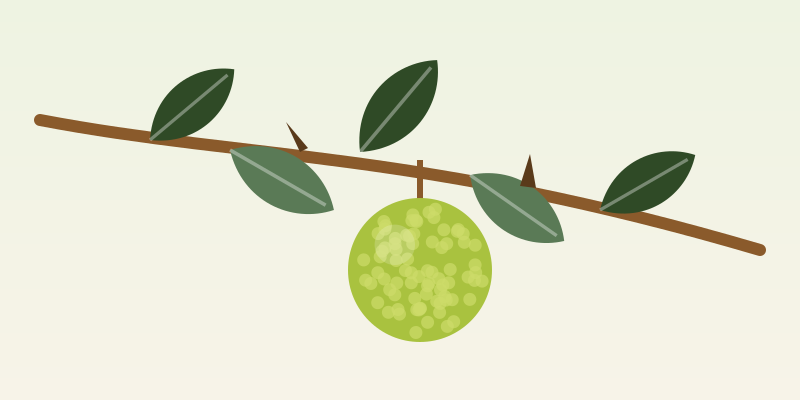
Osage orange (Maclura pomifera), the tree that produces hedge apples, is common along old fence lines, in pastures and on rural and suburban lots across much of the central and eastern United States. It is tough and long-lived, and it can be useful. It also has thorns, heavy fruit and a habit of spreading. These ten strategies will help you manage the trees you have and decide whether to plant more.
1. Confirm what you have
Before making decisions, make sure the tree really is Osage orange. Look for glossy, pointed, alternate leaves, sharp thorns on the twigs, orange-brown furrowed bark and milky sap from broken leaves or twigs. Female trees bear the bumpy, yellow-green fruit, which is roughly the size of a softball. Our identification guide covers the details.
2. Find out whether it is male or female
Osage orange is dioecious: individual trees are either male or female, and only female trees produce hedge apples. If a tree has never fruited after reaching maturity, it is probably male. This matters for planning, because a male tree will never drop fruit on your lawn or driveway.
3. Plan for autumn fruit drop
Female trees drop their fruit in early to mid autumn. The fruits are heavy and hard enough to dent cars, damage mower blades and roll down slopes into drives and ditches. Avoid parking under fruiting trees in autumn, and pick up fallen fruit before you mow. Many owners simply rake the fruit into a pile at the edge of the property, where squirrels and other wildlife pick at the seeds over winter.
4. Treat the thorns with respect
The thorns can be well over an inch long and are stiff enough to puncture tires and gloves made of thin material. Wear heavy leather gloves, long sleeves and eye protection when you prune or handle cut branches. Chip or burn thorny brush promptly, according to local rules, rather than leaving it where people, pets or tires can find it.
5. Protect your skin from the sap
The milky latex in the leaves, twigs and fruit can irritate the skin of some people. Wear gloves when you handle the fruit or fresh cuttings, and wash your hands afterward. If you know you are sensitive to plant sap, take extra care.
6. Prune at the right time
Prune while the tree is dormant, from late winter to early spring, when you can see the branch structure clearly. Remove dead, crossing and low branches over walkways, and do not take off more than about a quarter of the live canopy in one year. For large trees near buildings or power lines, hire a qualified arborist.
7. Choose thornless, fruitless selections for new planting
If you like the tree's toughness but not its thorns or fruit, look for male, thornless cultivars sold by nurseries. 'White Shield' and 'Wichita' are two examples often listed. They give you the drought- and heat-tolerant shade tree without the autumn cleanup. Check each nursery's description, because availability varies by region.
8. Put the wood to use
Osage orange wood is dense, strong and highly resistant to decay. That is why it was prized for fence posts and is still sought after for bows, tool handles and turned pieces. If you remove a tree, ask local woodworkers or bowyers whether they want the logs. As firewood it burns very hot but tends to spark and pop, so burn it only in a closed stove. Our guide to Osage orange wood explains more.
9. Keep pest-control expectations realistic
Hedge apples are often placed in basements to keep away spiders and insects. Laboratory studies have found that some concentrated compounds extracted from the fruit can repel certain insects. There is no good evidence that whole fruits placed around a house work as pest control. See our summary of the research before relying on them.
10. Manage spread and livestock risks
Osage orange can sprout from roots and seed into pastures, where thickets become hard to clear. Mow or cut seedlings while they are small. Livestock owners often remove fallen fruit from pastures, because there are reports of cattle and horses choking on whole fruits. Your county extension office is a good source of local advice on control methods and on any herbicide use.
Summary
An Osage orange tree can be a long-lived, low-maintenance asset if you know what you have and plan around it. Identify the tree and its sex, prepare for fruit drop and thorns, prune while it is dormant and choose thornless male selections for new planting. To learn more about the tree itself, start with What Is a Hedge Apple?